

“When cats run home and light is come,And dew is cold upon the ground...Alone and warming his five wits,The white owl in the belfry sits.”
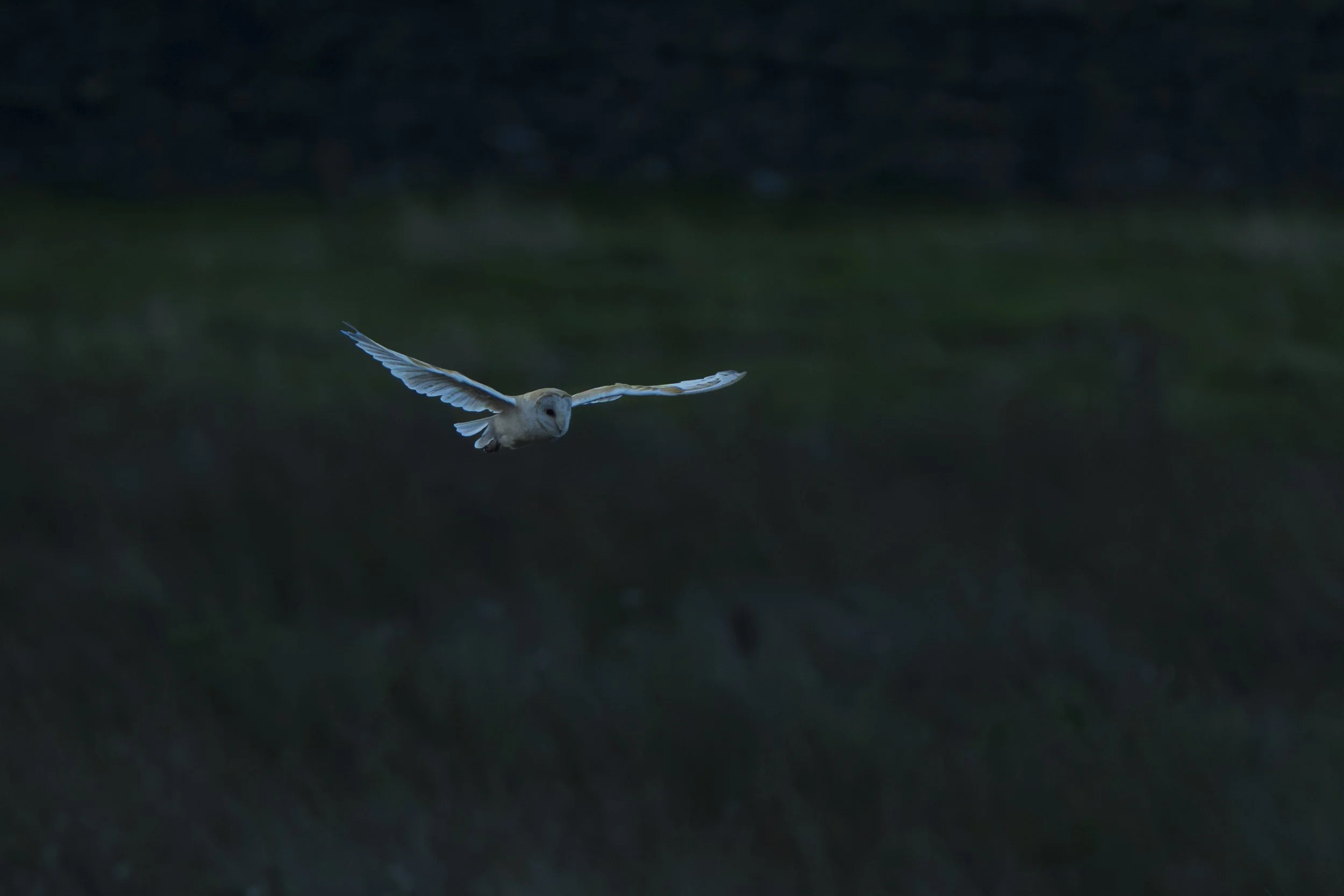
There is something special about watching a Barn Owl hunt as the landscape wakes around it.
Arriving before sunrise means entering the field while it's still dark. At that point, the owl is often little more than a pale shape moving through the gloom. But as the first light reaches the landscape, everything changes.
For me, these sessions aren't simply about finding a Barn Owl.
They're about finding the light and anticipating where the owl will be when it arrives.
ARRIVE BEFORE THE LIGHT
The most important part of a sunrise session happens before sunrise.
I want to be in position well before the first useful light appears. That gives me time to settle down, watch the area and work out where the owl is hunting.
Barn Owls are constantly moving, so there's little point simply pointing the camera at the place where you've just seen one.
Instead, I watch the flight path.
Where does it appear from?
Which areas of the field does it favour?
Is it flying along the field edge or quartering the grass?
Once I start to understand the pattern, I can begin thinking about where the photograph might happen.
WATCH THE LIGHT
Sunrise photography can change incredibly quickly.
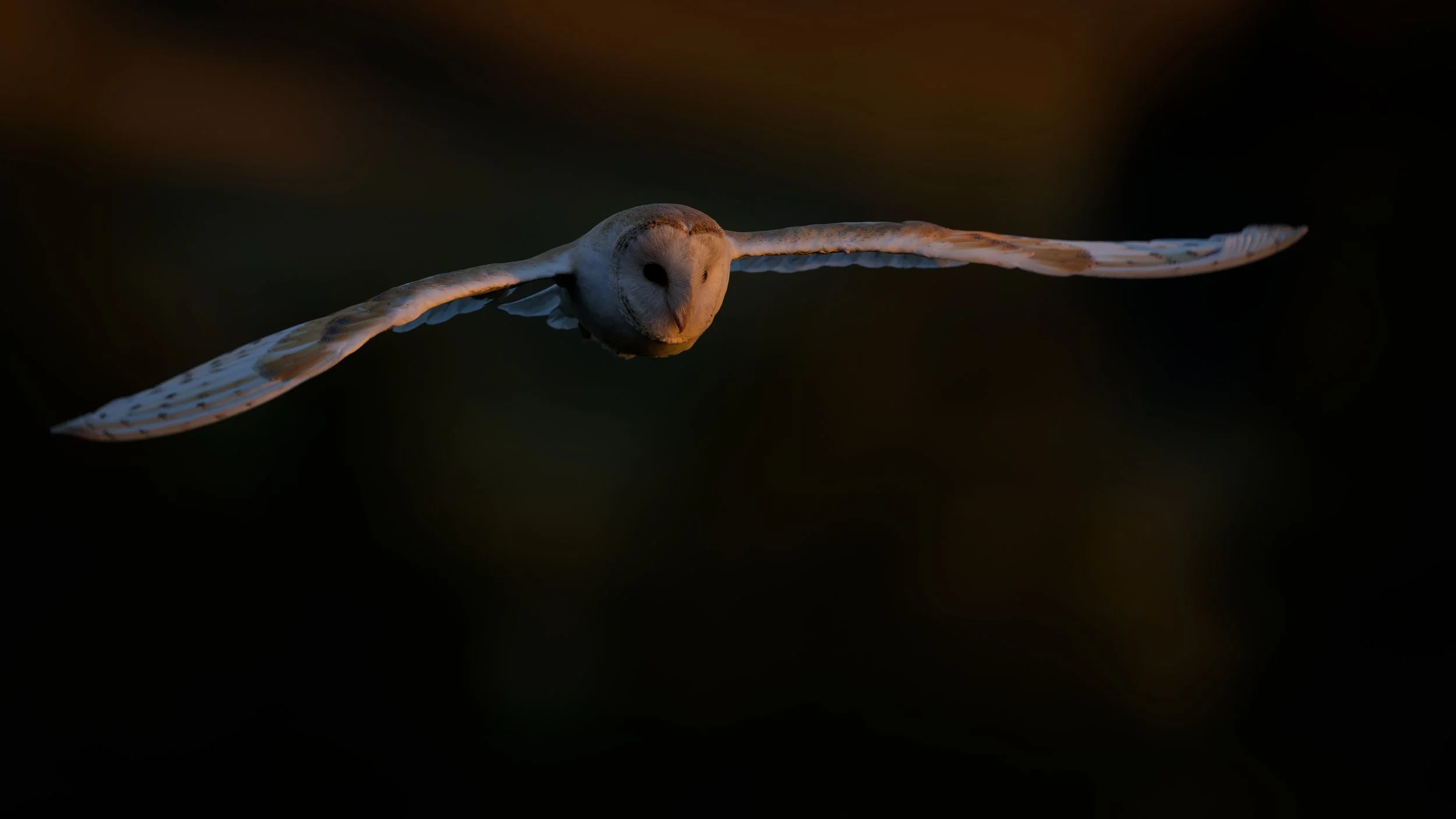
At first there may be barely enough light to separate the owl from the background. Then the sun reaches the horizon and suddenly the grasses begin to glow.
This is when I start looking beyond the owl itself.
Where is the light coming from?
What is it illuminating?
What is happening behind the bird?
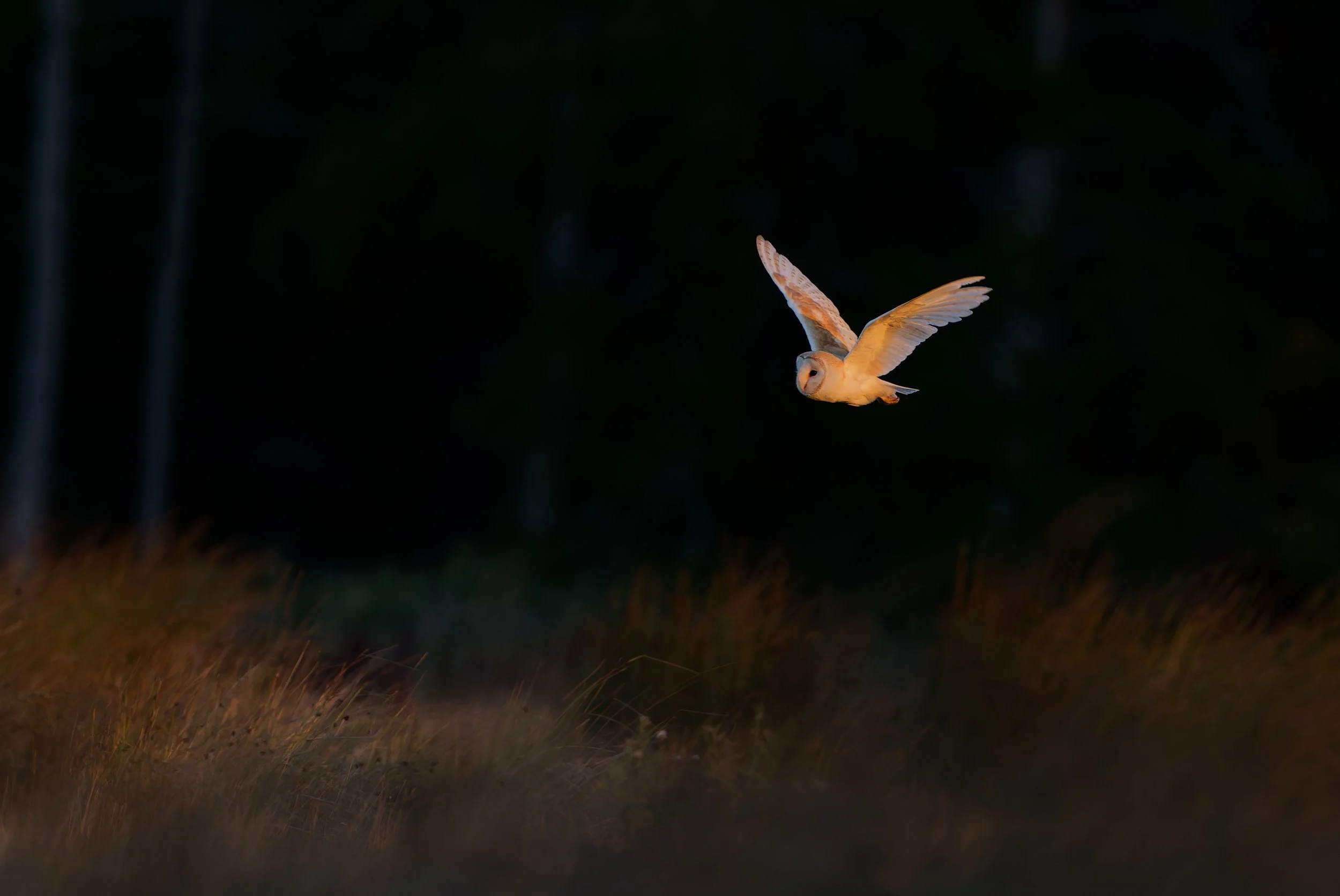
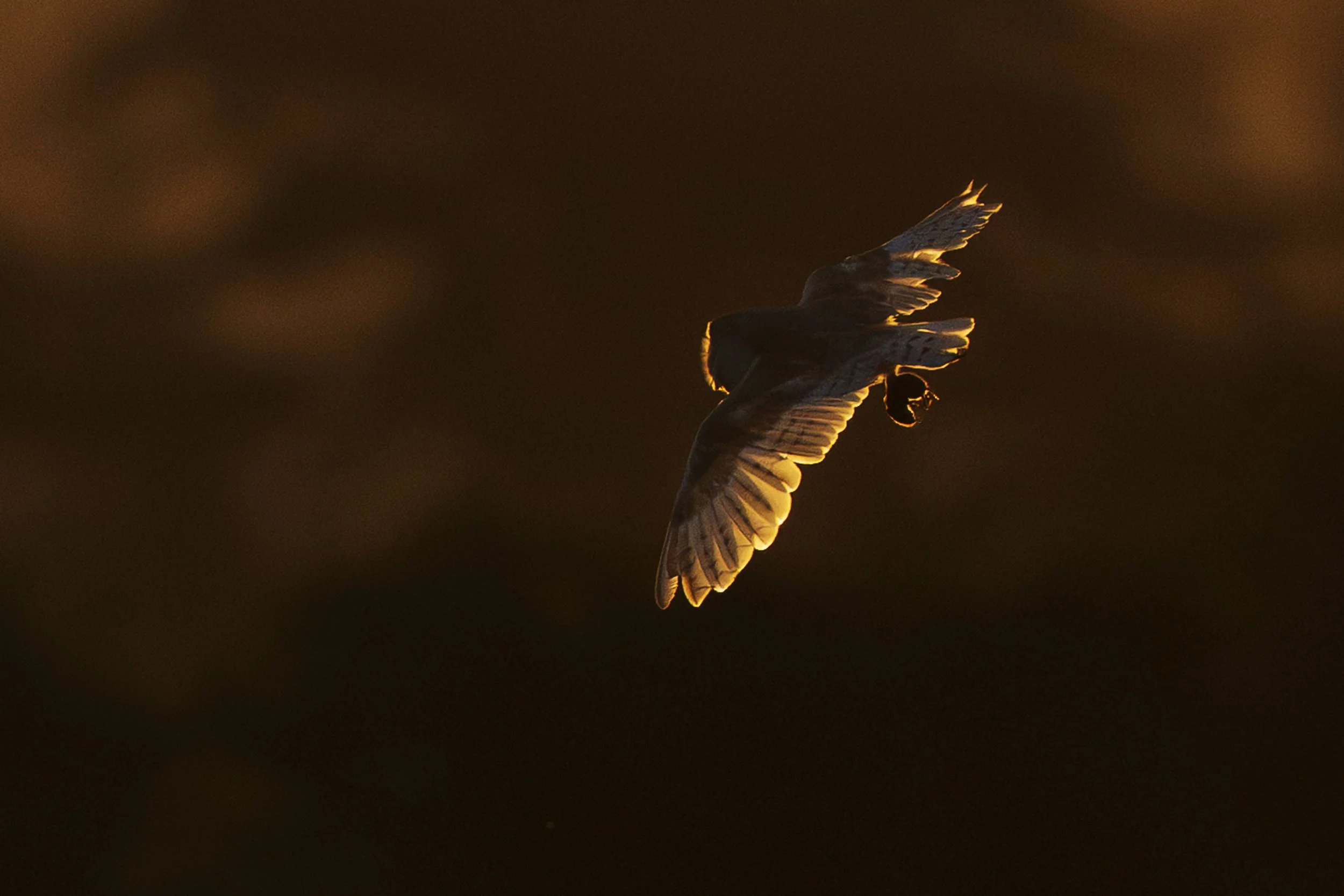
A Barn Owl against a messy background can become a much stronger photograph when the background falls into shadow and the bird is picked out by that first warm light.
For me the light is more important than the subject.
READ THE DIRECTION OF LIGHT
The quality of the light isn't the only thing that matters. Where that light is coming from can completely change the photograph.
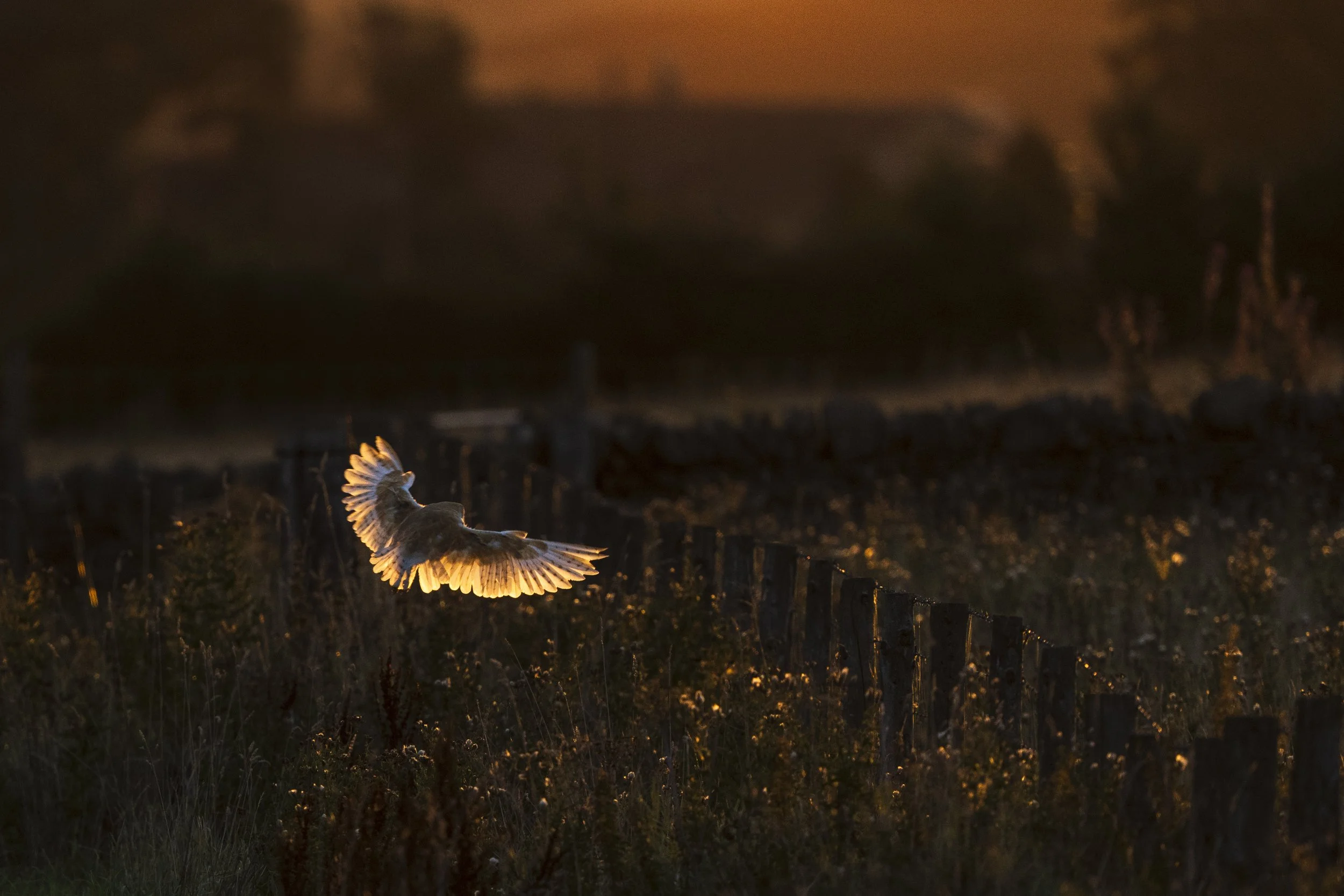
Front light can reveal detail across the bird, while side light can emphasise texture and form. Backlighting can separate the owl from a darker background and create a rim of light around the feathers.
Rather than staying fixed in one position, I'll look at where the sun is coming from and how the owl is moving through the landscape.
Sometimes moving just a few metres can turn an ordinary flight photograph into something much more interesting.
Don't just watch the subject. Watch the light falling on it.
DON'T CHASE THE CLOSEST FRAME
It's tempting with wildlife photography to concentrate on getting closer and filling the frame.
But sometimes the photograph becomes more interesting when you do the opposite.
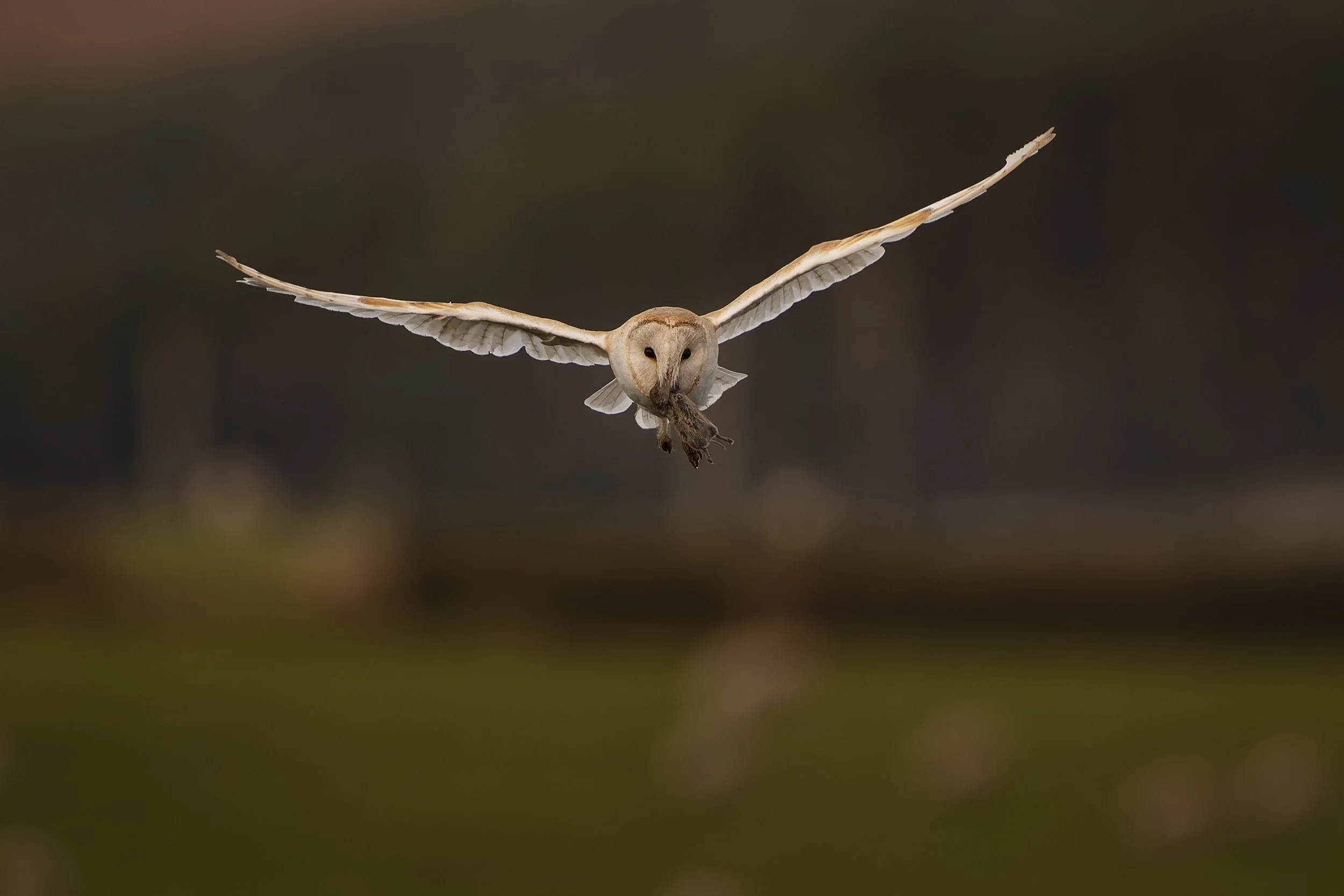
The wider image can show the owl within its environment — the rough grassland, the hedgerows, the mist or the first light of the day.
That context tells us something about the animal.
It's not just a Barn Owl.
It's a Barn Owl hunting over the landscape at sunrise.
And sometimes that makes for a much more compelling photograph.
ANTICIPATE THE FLIGHT
Once the owl settles into a hunting pattern, I'm trying to predict what happens next.
Rather than reacting when the bird suddenly appears in the viewfinder, I want to have an idea of where it is going.
That means watching its behaviour rather than simply watching the camera.
If it repeatedly crosses the same area of the field, I'll position myself with that flight path in mind.
Then it's a case of waiting.
The owl does the flying.
I just need to be ready when it comes into the light.
THEN MAKE THE PHOTOGRAPH
Once everything comes together, I'm thinking about the same four things I always consider:
Light. Background. Position. Composition.
The camera settings are important, particularly when working in the low light of sunrise, but they are only there to allow me to capture the moment.
A fast shutter speed can freeze the wings.
Good positioning can give me a clean background.
And the right light can transform an otherwise ordinary flight photograph.
The aim isn't simply to produce a sharp photograph of an owl.
It's to produce a photograph that makes you feel what it was like to be there.
STAY FOR THE CHANGE
One of the reasons I enjoy sunrise photography is that the conditions are never static.
The light changes.
The background changes.
The behaviour can change.
And sometimes the photograph you imagined when you arrived isn't the photograph you eventually make.
On this morning, the owls gave me several different opportunities as the light developed — from almost complete darkness through to warm golden sunlight and flat overcast cloudy skies.
The temptation is to pack away once you've got a good photograph.
But often, the best photograph is still waiting for the light to change.
THE TAKEAWAY
Don't just look for the owl.
Look for the light.
Arrive early, watch the flight path, understand the behaviour and think about where the bird is going rather than where it has just been.
Sometimes giving the animal space allows the landscape, the light and the behaviour to become part of the story.
The owl is the subject.
The light is what makes the photograph.